
Yes, you can buy a home with your siblings in the UK. Lenders treat a sibling application exactly like any other joint application: combined incomes, combined credit checks, and combined liability for the mortgage. Before you go any further, run through these three steps right now.
- Choose your ownership type. Decide between joint tenants (equal shares, automatic survivorship) and tenants in common (flexible shares, each sibling can leave their portion in a will). Most siblings choose tenants in common.
- Confirm affordability and joint liability. Every borrower is fully responsible for the whole debt. Check that all siblings can sustain repayments if one person stops contributing.
- Instruct a conveyancer and prepare a deed of trust. This single document records who owns what, who paid what, and what happens when someone wants to leave.
Before you book a mortgage appointment, run these urgent checks:
- Pull your credit reports (Experian, Equifax, TransUnion) so there are no surprises.
- Clarify whether deposit funds are gifts or loans, and get a gift letter ready if needed.
- Confirm whether any sibling already owns another property, because that triggers the SDLT higher-rate surcharge on the purchase.
For legal definitions of joint ownership and official SDLT guidance, GOV.UK and HM Land Registry are the authoritative starting points.
Key takeaways
Buying property with siblings in the UK is practical and achievable when ownership type, joint liability, and exit terms are agreed and documented before completion.
| Point | Details |
|---|---|
| Choose tenants in common | Most siblings benefit from tenants in common, which records unequal shares and allows each person to leave their portion in a will. |
| Accept joint-and-several liability | Every sibling on the mortgage is fully liable for the whole debt; confirm all parties can sustain repayments if one person defaults. |
| Get a deed of trust | A Declaration of Trust executed before completion records shares, contributions, buy-out formula, and exit terms, avoiding costly court disputes. |
| File your SDLT return | SDLT applies on purchase and on buy-outs where chargeable consideration is paid; an SDLT return must be filed within 14 days even where no tax is due. |
| Use Cohaus for structure | Cohaus provides shared deposit tools, deed templates, and partner introductions to help siblings co-buy with clear legal protections and transparent exit terms. |
Table of Contents
- How you hold the property: joint tenants or tenants in common?
- What lenders actually check on a joint sibling mortgage
- Why you must have a deed of trust before you complete
- Tax and costs to budget for when siblings buy together
- How to buy out a sibling (including inherited property)
- Managing risks: what can go wrong and how to protect yourself
- Step-by-step checklist and realistic timeline to completion
- How Cohaus supports siblings who want to co-buy
- Who to contact next: solicitors, brokers and the right questions to ask
- When buying with siblings makes sense — and when it does not
- Cohaus: a structured route to co-buying with your siblings
- Sources
How you hold the property: joint tenants or tenants in common?
For siblings buying property together, tenants in common is usually the right choice. It lets you hold different percentage shares, leave your share to whoever you choose in a will, and record unequal deposit contributions clearly. Joint tenancy makes sense only when siblings contribute equally and want automatic survivorship (the surviving owner inherits automatically, with no need for probate on that share).
GOV.UK explains that beneficiaries should record their ownership choice and consider a Declaration of Trust when shares are unequal. HM Land Registry confirms that the ownership type is recorded in panel 10 of the TR1 transfer form, and that a Form A restriction may appear on the title register where a tenancy in common share needs protection.
| Feature | Joint tenants | Tenants in common |
|---|---|---|
| Ownership rights | Equal, undivided share | Defined percentage each |
| Survivorship | Automatic (right of survivorship) | No automatic survivorship |
| Leave share in a will | No | Yes |
| Typical sibling use case | Equal contributions, long-term hold | Unequal deposits or different plans |
| Severing the arrangement | Either owner can sever unilaterally | Shares already separate |
| Effect on sale | Both must agree; proceeds split equally | Proceeds split per recorded shares |

As tenants in common, the deed of trust records a 60/40 split. On sale, proceeds (after repaying the mortgage) are divided 60/40. Mortgage responsibility remains joint and several throughout, meaning the lender can pursue either sibling for the full debt regardless of the internal split.
Pro Tip: When shares are unequal, register a Form A restriction at HM Land Registry alongside your Declaration of Trust. This prevents either sibling from selling or mortgaging the property without the other's consent, and it signals the beneficial interest arrangement to any future buyer or lender. A practical guide to tenants in common walks through how to record this correctly.
Key points to confirm before you sign:
- Which panel 10 box on the TR1 form reflects your chosen structure.
- Whether your solicitor will register a Form A restriction if you are tenants in common with unequal shares.
- That your wills are updated to reflect what happens to each sibling's share on death.
What lenders actually check on a joint sibling mortgage
No special "sibling mortgage" product exists. As The Times reports, lenders assess sibling co-buyers on the same combined affordability and credit criteria as any joint applicants. What changes is the relationship dynamic, not the underwriting process.
Joint-and-several liability is the most important concept to understand. Each borrower is fully liable for the entire mortgage debt, not just their share. If one sibling loses their job and stops paying, the lender can pursue the other for the full outstanding balance. This is not a technicality; it is the legal reality of every joint mortgage.
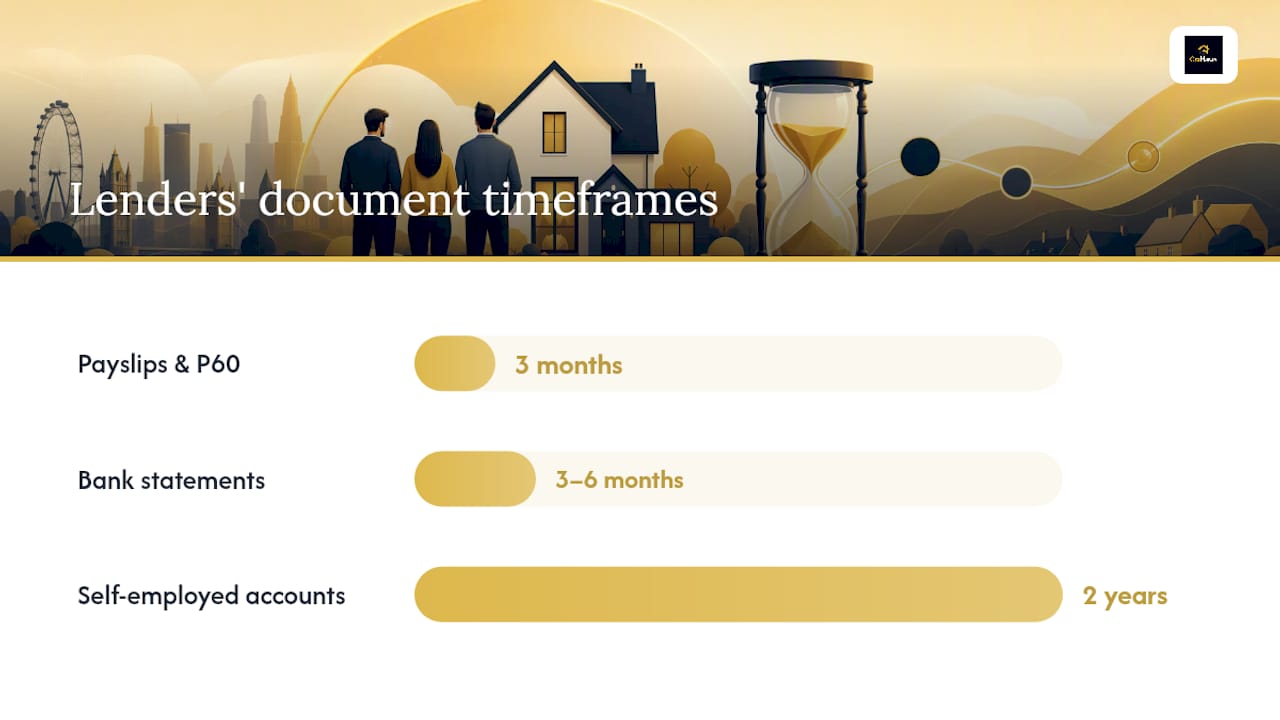
Documents lenders typically request from each applicant:
- Three months' payslips and P60 (or two years' accounts if self-employed).
- Three to six months' bank statements.
- Proof of deposit source, including a signed gift letter if any funds come from parents.
- Photo ID and proof of address.
- Details of existing credit commitments (loans, credit cards, car finance).
Most high-street lenders accept up to four applicants on a mortgage, though some cap at two. Lenders stress-test affordability at a higher notional interest rate to check you can still cover repayments if rates rise. Parental gifts are generally accepted, but lenders want written confirmation the money is a gift with no repayment expectation.
Pro Tip: Opening a joint bank account to manage mortgage payments and shared bills creates a lasting financial link. Credit reference agencies record this association, and it can affect each sibling's ability to borrow independently in future. Consider whether a shared account is genuinely necessary or whether standing orders from individual accounts achieve the same result with less credit entanglement.
A few questions siblings often ask at this stage:
Can one sibling be removed from the mortgage later? Yes, but only with the lender's consent. The remaining borrower must demonstrate they can afford the mortgage alone. This usually requires a full remortgage application.
Does a joint bank account affect the mortgage? Not the mortgage itself, but it creates a financial association on your credit file. The Times notes that this link persists and can influence future lending decisions for all account holders.
For a detailed breakdown of lender eligibility and affordability calculations, the joint mortgage guide on Cohaus covers the key variables.
Why you must have a deed of trust before you complete
A Declaration of Trust (also called a deed of trust) is not optional when siblings co-buy with different contributions or different long-term plans. Without one, any dispute about shares, costs, or exit goes to court, where a judge applies equitable accounting under the Trusts of Land and Appointment of Trustees Act 1996 (ToLATA). Myerson solicitors explain that courts adjust net proceeds based on contributions such as mortgage payments, repairs, and rental income — a process that is costly, slow, and unpredictable compared with a clear written agreement.
Core clauses your deed of trust should include:
- Ownership shares: the exact percentage each sibling holds.
- Deposit contributions: who paid what, and whether any contribution is a loan to be repaid first on sale.
- Mortgage payment splits: how monthly repayments are divided and what happens if one sibling cannot pay.
- Buy-out formula: how the property is valued (independent RICS valuation, agreed estate agent average, or fixed formula), and who bears the valuation cost.
- Notice periods: how much notice a sibling must give before triggering a sale or buy-out.
- Dispute resolution: a mediation clause before any court action.
- Death provisions: what happens to a sibling's share if they die (links to their will and any life insurance).
- Occupation rights: whether one sibling can live there rent-free or whether an occupancy charge applies.
A sample buy-out clause might read: "The buying sibling shall instruct an independent RICS-registered valuer at their own cost. The buy-out price shall be the open market value less the outstanding mortgage balance, multiplied by the selling sibling's recorded percentage share." This removes ambiguity at the moment when emotions are highest.
Pro Tip: The deed must be executed as a deed (signed, witnessed, and dated) before completion, not after. A deed signed after completion may not bind the parties in the same way. Your solicitor should draft it alongside the conveyancing, not as an afterthought.
Steps to get the deed right:
- Instruct a solicitor to draft the deed alongside the conveyancing.
- Confirm the ownership shares match panel 10 of the TR1 form.
- Register a Form A restriction at HM Land Registry if shares are unequal.
- Each sibling should have independent legal advice before signing.
- Store the executed deed securely and share a copy with each sibling's solicitor.
The Cohaus deed of trust guide covers drafting and registration in detail.
Tax and costs to budget for when siblings buy together
GOV.UK confirms that Stamp Duty Land Tax (SDLT) applies wherever a transfer involves chargeable consideration, including a sibling buy-out or the assumption of mortgage debt. An SDLT return must be filed within 14 days of completion, even where the tax due is nil.
SDLT basics for a joint purchase in England:
- SDLT is charged on the full purchase price at the prevailing residential rates.
- If any sibling already owns another property anywhere in the world, the higher-rate surcharge (currently 5%) applies to the entire purchase price.
- First-time buyer relief is only available if all buyers are first-time buyers.
- In Scotland, Land and Buildings Transaction Tax (LBTT) applies instead; in Wales, Land Transaction Tax (LTT) applies. Rates and thresholds differ, so check the relevant revenue authority for your jurisdiction.
Worked example (England, no existing property):
Two siblings buy a property for £350,000. Neither owns another property. SDLT is calculated at standard residential rates on £350,000. If one sibling already owns a buy-to-let flat, the higher-rate surcharge applies to the full £350,000 purchase price, adding a material cost to the transaction.
Costs checklist:
- Solicitor/conveyancer fees (typically £1,000–£2,500 per transaction, varying by region and complexity).
- Deed of trust drafting (often charged separately, typically £200–£500).
- Mortgage arrangement fee (varies by lender and product).
- Valuation/survey (homebuyer report or full structural survey).
- HM Land Registry registration fee (scale fee based on property value).
- SDLT return filing (your solicitor usually handles this as part of conveyancing).
- Early repayment charges if any sibling is breaking an existing mortgage.
Pro Tip: Budget for the higher-rate SDLT surcharge as a contingency even if you believe it does not apply. Ownership of overseas property, inherited shares, or a property held in trust can all trigger it. Confirm each sibling's full property ownership history with your solicitor before exchange.
How to buy out a sibling (including inherited property)
When one sibling buys out another, SDLT is charged on the consideration paid for that share, not the full property value. CalculateMyStampDuty explains that buying out a sibling's share of an inherited property is chargeable consideration for SDLT on the amount paid, and that an SDLT return is required even where no tax is due.
Step-by-step buy-out process:
- Agree to proceed. All co-owners confirm in writing that a buy-out is the chosen route.
- Obtain probate authority (if the property was inherited and the estate is not yet administered). No transfer can be registered without this.
- Commission an independent valuation. A RICS-registered valuer provides an open market value figure that both parties accept or negotiate from.
- Instruct solicitors. Each sibling should have their own solicitor for the transfer.
- Arrange finance. The buying sibling either pays cash or applies for a mortgage or remortgage to fund the buy-out.
- Execute the TR1 transfer form. The solicitor prepares and registers this at HM Land Registry.
- File the SDLT return within 14 days of completion and pay any tax due.
Worked example: A property is valued at £400,000 with a £150,000 mortgage outstanding. Sibling A buys out Sibling B. Sibling A pays £125,000 in cash. SDLT is calculated on £125,000 (the consideration paid). If Sibling A already owns another property, the higher-rate surcharge applies to that £125,000 figure.
Capital Gains Tax note: The selling sibling (Sibling B in the example above) may have a CGT liability on any gain above their annual exempt amount, depending on whether the property was their main residence and for how long. A tax adviser should confirm this before the transfer completes.
- If an executor sells the property instead of beneficiaries agreeing a buy-out, different rules apply and CGT timing shifts.
- A pure assent (where a property passes to a beneficiary without payment) does not trigger SDLT, but any assumption of mortgage debt does.
Managing risks: what can go wrong and how to protect yourself
The biggest single risk in a joint sibling mortgage is joint-and-several liability. Every sibling must accept this upfront, not as a formality but as a genuine financial commitment. If one person defaults, the lender pursues the others.
Common risks:
- One sibling misses payments, damaging all co-owners' credit scores.
- A relationship breakdown leads to one sibling wanting to sell while others do not.
- Unequal effort (one sibling pays for repairs, another does not contribute) creates resentment without a clear cost-sharing record.
- Death or serious illness leaves the remaining siblings unable to service the mortgage alone.
- One sibling wants to move out but cannot be removed from the mortgage without lender consent.
Protection checklist:
- Life insurance and critical illness cover for each sibling named on the mortgage. A guide to life insurance for joint mortgages explains the options.
- A deed of trust with a clear buy-out formula and notice period (see Section 4).
- Documented deposit contributions from day one, including any parental gifts or loans.
- A ringfenced maintenance fund (a shared savings account specifically for property costs).
- Regular financial reviews, at least annually, to confirm all siblings can still meet their obligations.
- A clear exit timetable in the deed: what triggers a forced sale, and what the process looks like.
Without a formal agreement, Myerson notes that courts apply equitable accounting to adjust proceeds based on contributions — a process that is expensive and uncertain. The deed of trust is the single most effective protection against this outcome.
Pro Tip: Set a simple buy-out formula in the deed and agree to an independent valuer rather than negotiating a price at the point of dispute. Revisit the deed every two to three years or whenever a sibling's circumstances change materially (new job, new partner, new child). A short annual review costs far less than a contested sale.
For a deeper look at the credit consequences of joint liability, the joint-and-several liability guide on Cohaus is worth reading before you apply.
Step-by-step checklist and realistic timeline to completion
A straightforward sibling purchase typically takes 8–12 weeks from mortgage application to completion. Add probate to that timeline and you are looking at 6–12 months. The steps below apply whether you are buying together from scratch or formalising inherited co-ownership.
Numbered checklist:
- Agree intent in writing. All siblings confirm the plan, the ownership split, and who is contributing what to the deposit.
- Check credit scores and deposit sources. Each sibling pulls their credit report and clarifies whether any deposit funds are gifts or loans.
- Choose ownership type. Decide joint tenants or tenants in common and agree the percentage split.
- Instruct a mortgage broker. A broker with multi-applicant experience can identify lenders who will accept your combined profile.
- Instruct a conveyancer/solicitor. Each sibling should have independent legal advice; one solicitor can act for all buyers only where there is no conflict of interest.
- Draft and execute the deed of trust. Complete this before exchange, not after.
- Apply for the mortgage. Submit full documentation and respond promptly to lender queries.
- Commission a survey. A homebuyer report or full structural survey protects you from hidden defects.
- Exchange contracts. You are legally committed at this point.
- Complete. Funds transfer, keys are handed over.
- Register title at HM Land Registry. Your solicitor files the TR1 and any Form A restriction.
- File the SDLT return within 14 days of completion.
Documents to gather early:
- Photo ID and proof of address for each sibling.
- Three months' payslips and latest P60 (or two years' accounts if self-employed).
- Three to six months' bank statements.
- Gift letters for any parental contributions.
- Existing mortgage statements (if any sibling is a current homeowner).
- Wills and probate paperwork if the property is inherited.
Pro Tip: Instruct your solicitor and mortgage broker at the same time, not sequentially. The deed of trust drafting and the mortgage application can run in parallel, saving several weeks. Cohaus can introduce you to vetted brokers and solicitors who are familiar with co-buying structures.
How Cohaus supports siblings who want to co-buy
Cohaus offers a structured co-buying route that covers the practical steps siblings often find hardest: organising shared deposits, accessing legal templates, and finding professionals who understand multi-applicant purchases.
What Cohaus provides:
- Community matching to connect co-buyers with shared goals (useful if you want to expand beyond your immediate family).
- Shared savings tools to track deposit contributions from each sibling transparently.
- Deed of trust templates as a starting point for your solicitor to adapt.
- Introductions to mortgage brokers and solicitors experienced in co-buying structures.
- Curated onboarding steps so you know what to do and when.
How to get started:
- Register on Cohaus.
- Set your co-buying goals and invite your siblings to join.
- Use the platform's resources to prepare your deposit documentation and ownership preferences.
- Access partner introductions when you are ready to instruct a broker or solicitor.
Important: Cohaus is a support and referral platform, not a legal adviser. Always get independent legal and financial advice before signing any mortgage or property transfer document.
Pro Tip: Use Cohaus's onboarding steps to prepare a clear summary of each sibling's contribution, income, and ownership preference before your first broker meeting. Arriving with this information ready saves time and signals to lenders that you have thought the arrangement through.
Who to contact next: solicitors, brokers and the right questions to ask
Instruct a conveyancer and a mortgage broker early, ideally at the same time. The broker identifies which lenders will accept your combined profile; the solicitor handles the legal structure, the deed of trust, and the SDLT filing. Neither can do the other's job.
Questions to ask your mortgage broker:
- Which lenders on your panel accept three or more applicants?
- How do you treat parental gift deposits in affordability calculations?
- Have you arranged mortgages for siblings with unequal ownership shares before?
- What happens to the mortgage if one sibling wants to leave in three years?
- Can you model a buy-out scenario so we understand the remortgage implications?
Questions to ask your solicitor:
- Will you draft a Declaration of Trust alongside the conveyancing, and what is the additional fee?
- Can you register a Form A restriction at HM Land Registry to protect unequal shares?
- How do you handle the SDLT return, and what is your process if a surcharge applies?
- What is your estimated timeline from instruction to completion?
- If one sibling needs independent advice, can you refer them to a colleague?
Typical fee ranges (England, 2026, approximate):
- Conveyancing: £1,000–£2,500 depending on property value and complexity.
- Deed of trust drafting: £200–£500 as an add-on to conveyancing.
- Homebuyer survey: £400–£900 depending on property size and location.
- Mortgage broker fee: £0–£500 (many brokers are paid by lender commission; some charge a separate fee for complex cases).
Practical co-buying workflows, including solicitor questions and the TR1 process, are covered in detail by Pearson Solicitors.
Pro Tip: Ask every professional for a fixed-fee estimate tied to specific milestones: valuation, mortgage offer, exchange, and completion. Hourly billing on a co-buying transaction can escalate quickly if there are delays or additional queries. A milestone-based quote keeps everyone accountable.
When buying with siblings makes sense — and when it does not
Buying with siblings works best when goals align, contributions are documented, and there is a clear exit plan from the start. That combination is rarer than it sounds.
The financial case is straightforward. Pooling deposits and incomes can unlock properties that neither sibling could afford alone, and co-ownership spreads the fixed costs of homeownership across more people. Co-buying with family is rising as a response to affordability pressure, and siblings often have a level of mutual trust that makes the arrangement easier to sustain than co-buying with friends.
The non-financial factors are where most arrangements run into difficulty. Life plans diverge. One sibling gets a job offer in another city. Another wants to start a family and needs the space. A third goes through a relationship breakdown that changes their financial position entirely. None of these are unusual, and none of them are easy to manage without a deed of trust that anticipated them.
A simple decision flow: Are all siblings' incomes stable enough to sustain the mortgage independently if needed? Do you all want to own this property for a similar timeframe? Are you willing to sign a formal agreement that records contributions and exit terms? If the answer to any of these is uncertain, that uncertainty needs to be resolved before you exchange, not after.
Avoid co-buying with siblings if any of the following apply: one sibling has a poor credit history that will affect the mortgage terms for everyone; family relationships are already under strain; or any sibling is unwilling to sign a deed of trust. The absence of a formal agreement is not a sign of trust; it is a sign of unresolved risk.
If you are uncertain whether co-buying with siblings is the right structure for your situation, Cohaus's community and matching tools can help you think through the options and connect with others who have navigated the same decision.
Cohaus: a structured route to co-buying with your siblings
Co-buying with siblings is achievable, but the paperwork, legal structure, and professional introductions can feel like a lot to coordinate at once. Cohaus exists to make that process clearer and more manageable.

Cohaus brings together shared deposit tracking, deed of trust templates, and introductions to mortgage brokers and solicitors who understand co-buying. You are not starting from scratch. The platform gives you a structured process: agree your goals, document your contributions, and connect with the right professionals at the right time. Transparent exit terms and legal protections are built into the framework from the start, so every sibling knows where they stand.
Register at Cohaus to set up your co-buying profile, invite your siblings, and access partner introductions when you are ready to move forward. Independent legal and financial advice remains your responsibility; Cohaus is a support and referral platform, not a legal service.
Sources
These are the authoritative resources to check tax rules, ownership definitions, and registration requirements before you proceed.
- Gov
- What kind of joint ownership do I have? (HM Land Registry blog)
- Buying a property with friends: what happens if things go wrong (Myerson)
- Stamp Duty when you inherit property (CalculateMyStampDuty)
- We’re siblings and bought a house together — here’s how we did it (The Times)
This article provides general information only and is not legal or financial advice. Confirm current SDLT rates, registration requirements, and your personal tax position with a qualified solicitor or tax adviser before proceeding.
This article is general information, not a substitute for advice from a qualified financial advisor. Consult a qualified financial professional about your own circumstances before acting on anything here.