
TL;DR:
- Several UK home buying alternatives, including shared ownership and interest-free schemes, provide flexible options for buyers. Many are FCA-regulated, ensuring consumer protection, with providers like Gatehouse Bank and StrideUp standing out for ethical and fast processes. Co-buying platforms such as Cohaus offer legal protections and community support, making collaboration a practical path to homeownership.
The strongest alternatives to Wayhome available in the UK right now are Shared Ownership, Home Purchase Plans (Islamic finance), shared equity loans, and co-buying platforms. Each suits a different financial situation, and several are FCA-regulated. Here is a quick overview of the main options:
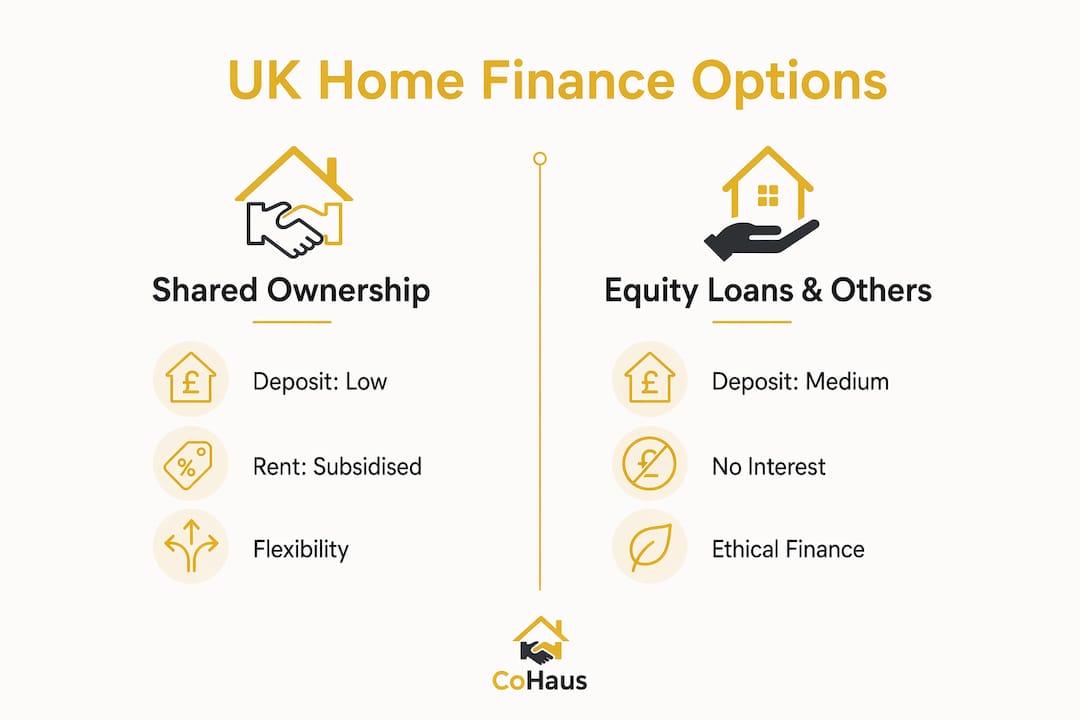
- Shared Ownership (via providers like Home Reach): buy a variable share and pay rent on the rest, with the option to buy more shares over time
- Home Purchase Plans: Shariah-compliant alternatives to conventional mortgages, offered by Gatehouse Bank London and StrideUp, with no interest charged
- Shared equity loans (Proportunity): top up your deposit with an equity loan, buying with a low deposit down
- Interest-free home buying (Pfida): the OwnTogether scheme lets buyers purchase without paying interest at any stage
- Government-backed schemes: the Mortgage Guarantee Scheme, Lifetime ISA, and Help to Buy (Wales only) remain active in 2026
- Co-buying platforms (Cohaus): pool deposits and mortgage responsibilities with compatible co-buyers, with legal protections built in
Eligibility, deposit requirements, and costs vary considerably across these options. Regulatory status matters too: FCA regulation is the clearest sign that a provider meets UK consumer protection standards.
Which UK providers offer the best alternatives to Wayhome?
Six providers cover the main categories of alternative home finance in the UK. Each takes a meaningfully different approach.
| Provider | Type of scheme | Deposit required | Special features | Regulatory status | Rating |
|---|---|---|---|---|---|
| Gatehouse Bank London | Home Purchase Plan | Not publicly listed | Shariah-compliant, green home finance, multiple industry awards | FCA-authorised | 4★ (239 reviews) |
| StrideUp | Home Purchase Plan / halal mortgage | Not publicly listed | Rates from 5.99%, fast process, first-time buyer focus | FCA-regulated | 4.4★ (87 reviews) |
| Pfida | Interest-free home buying (OwnTogether) | Not publicly listed | No interest at any stage, Shariah-compliant savings account | Not publicly listed | 3.8★ (35 reviews) |
| Proportunity | Shared equity loan | 5% | Equity loan boosts purchase budget, mortgage brokerage support | Not publicly listed | 4.3★ (22 reviews) |
| Cohaus | Co-buying platform | Shared across co-buyers | Legal protections, open exit terms, peer community support | Not publicly listed | 4.4★ (9 reviews) |
| Home Reach | Shared Ownership | Varies by share size | Buy 10%–75% share; example 30% share costs from approx. £62,400 | Not publicly listed | — |
Gatehouse Bank London stands out for buyers who want both ethical finance and environmental credentials. Its green home finance products sit alongside a Shariah-compliant Home Purchase Plan, and the bank has received awards from MoneyNet, Moneyfacts, and IFN, among others. It is a genuine option for buyers who want their finance to reflect their values.

StrideUp is the fastest-moving of the Islamic finance providers. Its FCA-regulated status and published rates from 5.99% make it easier to compare against conventional mortgages, which most Home Purchase Plan providers do not offer. First-time buyers who want speed and clarity tend to find StrideUp the most straightforward entry point.
Pfida's OwnTogether scheme is genuinely different: buyers never pay interest at any stage of the purchase. Pfida also offers a Shariah-compliant Grow-Your-Savings account, so buyers can build a deposit ethically before they are ready to buy.
Proportunity focuses on London buyers who are close to affording a home but need a deposit boost. Its equity loan tops up a 5% deposit, increasing the total purchase budget without requiring a larger upfront sum. The mortgage brokerage support is a practical addition for buyers who find the application process confusing.
Home Reach is the most accessible Shared Ownership option for buyers who want flexibility. Purchasing a 30% share, for example, costs between approximately £62,400 and £145,500 depending on the property, with rent paid on the remaining share.
How do alternative home buying schemes actually work?
Understanding the mechanics of each scheme prevents costly surprises later.
Shared Ownership lets you buy a percentage of a property and pay subsidised rent on the share you do not own. You can increase your ownership stake over time through a process called "staircasing," though some leasehold properties cap the maximum share you can reach. Resale restrictions sometimes apply: you may be required to offer the property back to the housing association before selling on the open market.
Home Purchase Plans replace the mortgage interest model entirely. Instead of lending you money at interest, the provider buys the property with you and you gradually buy them out. Gatehouse Bank and StrideUp both structure their plans this way, keeping the arrangement Shariah-compliant. The total cost depends on the agreed purchase price and the buyout schedule, not on a variable interest rate.
Shared equity loans, as offered by Proportunity, work differently again. You take out a conventional mortgage alongside an equity loan that covers part of the deposit gap. The loan is repaid when you sell or remortgage. This approach suits buyers who have a steady income but cannot save fast enough to reach a standard deposit threshold.
Key points to understand across all schemes:
- Deposit requirements start from 5% for the Proportunity equity loan route to the share price of a Shared Ownership property, which varies by location and share size
- Costs and fees include arrangement fees, legal costs, and in some cases ongoing rent; always request a full cost breakdown before committing
- Resale restrictions are most common in Shared Ownership; check the lease carefully for any obligation to offer the property back to the housing association first
- Contract terms for Home Purchase Plans differ from standard mortgages; an independent solicitor familiar with Islamic finance is worth engaging
- Long-term financial impact: shared equity loans reduce your net equity on sale; Shared Ownership staircasing costs accumulate with each tranche purchased
Pro Tip: Combining a Lifetime ISA with Shared Ownership is one of the most effective deposit-building strategies available to first-time buyers in 2026. The government adds a bonus to your savings, which you can then use as part of your share purchase.
How to choose the right Wayhome alternative for your situation
The right scheme depends on three things: how much deposit you have, whether your income meets the provider's criteria, and whether the scheme is available where you want to buy.
A useful starting point is the 28/36 rule: housing costs should not exceed 28% of your gross monthly income, and total debt repayments should stay below 36%. On a gross income of £3,000 per month, that means keeping housing costs under £840 monthly. This guides both what you can afford and which providers are likely to approve your application.
Credit history affects your options more than most buyers expect. Conventional mortgage lenders apply strict credit scoring, but some alternative providers, particularly those offering Shared Ownership or co-buying, take a broader view of affordability. If your credit file has gaps or past issues, co-buying through a platform like Cohaus may open doors that remain closed elsewhere.
Location narrows the field quickly. Proportunity operates in London. Help to Buy is only available in Wales. Shared Ownership is available across England, Scotland, Wales, and Northern Ireland, though regional schemes differ. Home Purchase Plans from Gatehouse Bank and StrideUp are available nationally.
Questions worth asking any provider before you proceed:
- What are the total costs over the first five years, including all fees and rent?
- Are there any resale restrictions or obligations to offer the property back?
- Is the provider FCA-regulated, and what protections does that give me?
- Can I combine this scheme with a Lifetime ISA or other government support?
On the question of second homes and tax: if you already own a property, a 5% SDLT surcharge applies to additional residential purchases as of october 2024. Local councils can also charge up to twice the standard Council Tax rate on second homes. These costs are worth factoring in before choosing a scheme.
How Cohaus approaches co-buying differently
Cohaus is built around a straightforward idea: buying with others reduces the financial barrier for everyone involved. Rather than relying on a single large deposit, co-buyers pool their resources, sharing both the deposit and the mortgage responsibility.
What makes the Cohaus model practical rather than just theoretical is the structure around it. Co-buyers are matched for compatibility, not just financial capacity. Legal protections are built into the process, and exit terms are transparent from the start, so no one is locked in without a clear route out. For buyers who have been renting for years and feel stuck, that clarity matters.
The community side of Cohaus is also worth noting. Forums and peer support connect co-buyers who are navigating the same questions, from understanding tenants in common arrangements to managing shared mortgage applications. That peer layer reduces the uncertainty that puts many buyers off co-purchasing altogether.
Cohaus works best for:
- Renters and lodgers who cannot reach a deposit alone but have a stable income
- Buyers who want legal protections and structured exit terms built in from day one
- People open to community-based ownership as a genuine alternative to solo purchasing
Key takeaways
The most effective approach for UK first-time buyers in 2026 is to match the scheme to your deposit size, location, and whether ethical finance matters to you, rather than defaulting to whichever option you hear about first.
| Point | Details |
|---|---|
| Scheme variety | Six distinct alternatives exist: Shared Ownership, Home Purchase Plans, shared equity loans, interest-free buying, government schemes, and co-buying. |
| Deposit flexibility | Proportunity requires a 5% deposit; Shared Ownership share sizes vary; co-buying spreads the deposit across multiple buyers. |
| FCA regulation matters | StrideUp and Gatehouse Bank are FCA-regulated; always check regulatory status before committing to any provider. |
| Stack your support | Combining a Lifetime ISA with Shared Ownership or a Home Purchase Plan is among the most effective strategies for first-time buyers. |
| Cohaus for co-buying | Cohaus offers legal protections, open exit terms, and community matching for buyers who want to purchase with others. |
The future of alternative home buying looks more collaborative
The conventional assumption that you need a 20% deposit to buy a home has quietly collapsed. Equity loan schemes, Shared Ownership, and co-buying platforms all enable purchases with far less upfront, yet the myth persists and keeps buyers on the sidelines longer than necessary.
What I find more interesting is the direction of travel. The schemes gaining ground are not just cheaper versions of traditional mortgages. They are structurally different: shared ownership of risk, shared deposits, and in the case of Home Purchase Plans, a complete departure from interest-based finance. That shift reflects something real about what buyers in 2026 actually want, which is transparency, flexibility, and a sense that the system is not entirely stacked against them.
The stacking trend is also underappreciated. Buyers who combine a Lifetime ISA bonus with a Shared Ownership purchase, or who use a joint borrower arrangement alongside an equity loan, are not gaming the system. They are using it as it was designed to be used. The buyers who struggle are often those who assume they must choose a single route and stick to it.
Co-buying platforms like Cohaus represent the next logical step: structured collaboration with legal safeguards, rather than informal arrangements between friends that fall apart when circumstances change. That is not a niche solution. For a growing number of first-time buyers, it may be the most realistic path to ownership available.
Cohaus: a practical route in when other options fall short
Most first-time buyers spend years saving alone, watching property prices move faster than their deposit. Cohaus offers a different starting point: co-buying with others who share the same goal, with shared deposits, mortgage responsibilities split across the group, and legal protections that keep everyone's interests clear.

Unlike informal co-purchasing arrangements, Cohaus builds the structure in from the beginning. Exit terms are open and agreed upfront. Co-buyers are matched for compatibility. Community forums connect members who are working through the same decisions. If you have been renting for years and the traditional routes feel out of reach, Cohaus is worth exploring as a genuinely different way to get on the property ladder.